
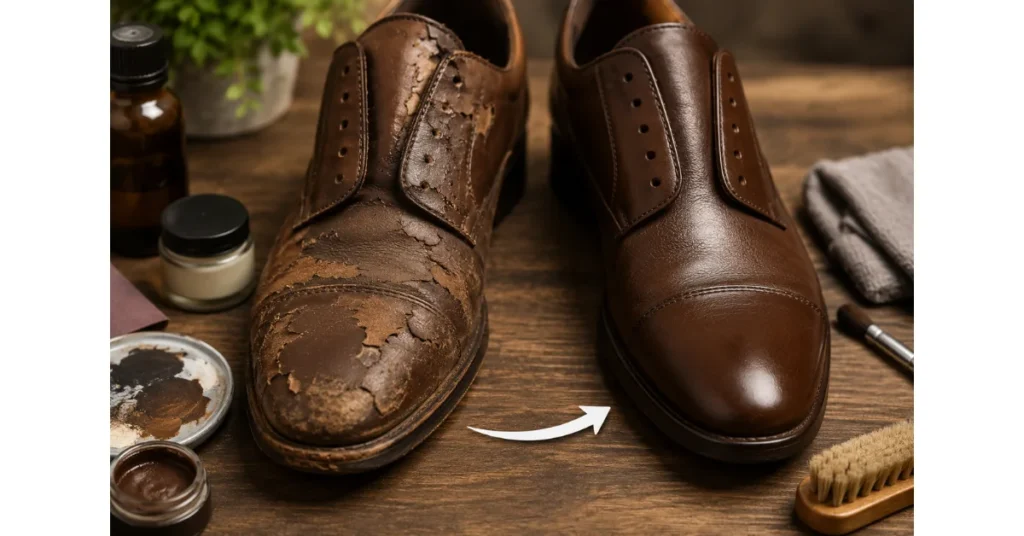
Fix Peeling Leather Shoes using the right repair techniques to restore their appearance and extend their lifespan. Peeling leather can make even high-quality shoes look old and damaged, but in many cases, the problem can be repaired at home with the proper tools and materials. In this guide, you’ll learn the best methods to fix peeling leather shoes, prevent further damage, and keep your favorite footwear looking its best for years to come.
Imagine that your favorite leather shoes are beginning to peel as you glance at them. It’s bad, just like staring at your closest friend’s face with a bruise. The pressing issue right now is how to repair shoes with peeling leather. However, don’t fret since I’ve been through it as well.
I’ve experimented with a lot of methods for repairing leather shoes, and I’m here to tell you which ones I found to be the most effective. Let’s discuss how to repair peeling leather footwear in a straightforward, step-by-step manner that anyone can understand.
Why Do Leather Shoes Start Peeling?
Understanding the cause of the damage is the first step to fixing peeling leather shoes correctly. Once you know why the leather is peeling, you can choose the most effective repair method and prevent the problem from getting worse.
Leather shoes can begin peeling due to age, moisture, poor-quality coatings, improper storage, or lack of regular maintenance. Faux leather is especially prone to peeling because its synthetic coating breaks down over time. Understanding the cause of peeling helps you choose the right repair method and prevent further damage.
Can Peeling Leather Shoes Be Repaired?
Yes, peeling leather shoes can often be repaired if the damage is not too severe. Small peeling areas can be restored using leather filler, repair compounds, matching leather paint, or conditioning products. However, if the leather has deep cracks or extensive peeling across large sections, professional restoration or replacement may be a better option.
Tools and Materials You’ll Need
If you want to Fix Peeling Leather Shoes successfully, always work slowly and allow each repair layer to dry completely before moving to the next step.
- Soft microfiber cloth
- Leather cleaner
- Fine sandpaper
- Leather filler
- Leather repair paint
- Small sponge
- Soft brush
- Leather conditioner
- Protective finish
Having the right tools before starting makes the repair process smoother and helps achieve a cleaner, longer-lasting finish.
Common Mistakes to Avoid
If you want to Fix Peeling Leather Shoes successfully, always work slowly and allow each repair layer to dry completely before moving to the next step.
Many people accidentally make the damage worse while trying to repair peeling leather shoes. Avoid sanding too aggressively, applying thick layers of paint, skipping the cleaning step, or using household glue that is not designed for leather. Allow every repair layer to dry completely before applying the next one for the best results.
How to Prevent Leather Shoes From Peeling Again
Regular maintenance is the best way to keep leather shoes in good condition. Clean them after use, apply a leather conditioner every few months, avoid excessive moisture, and store them in a cool, dry place. Using shoe trees can also help maintain their shape and reduce stress on the leather surface.
When Should You Replace Instead of Repair?
Repairing is worthwhile when peeling is minor or moderate. However, if the leather is flaking across most of the shoe, the sole is separating, or the material has become brittle, replacing the shoes may be more cost-effective than repairing them.
What are the definitions of faux and bonded leather? Think about these:
Remaining bits of genuine leather are joined with an adhesive to create bonded leather. After that, a synthetic substance is applied to enhance its appearance and feel. It isn’t as strong as genuine leather, though, and it may begin to peel with time.
In contrast, fake leather is entirely manufactured. It is made to resemble real leather in appearance and texture while avoiding the use of any animal-based materials. It comes in a wide variety of textures and finishes, and although it’s often less expensive and simpler to maintain than genuine leather, it doesn’t last as long.
In contrast to fake leather, which is entirely man-made but appears quite realistic, bonded leather contains some genuine leather but is less sturdy and robust.
How to fix peeling leather shoes—Best Techniques
When your favorite pair of leather shoes starts to peel, it might not be very pleasant. However, don’t fret—with the proper methods and a bit of perseverance, you can easily bring them back to their previous splendor. Based on my own experience, I will present seven practical strategies in this handbook to help you repair your peeling leather footwear and increase its lifespan.
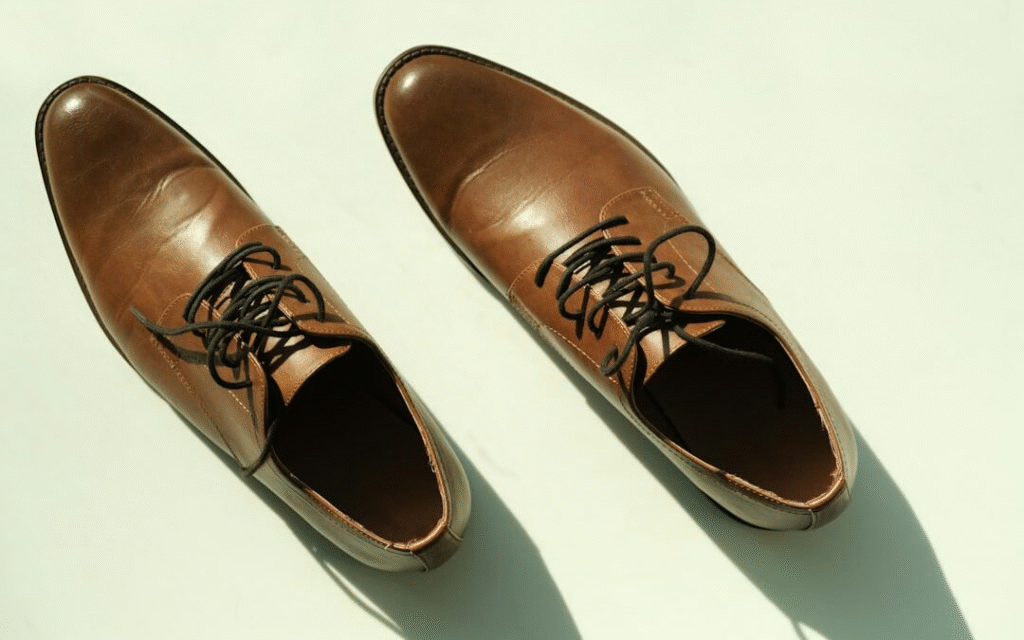
Before beginning repairs, it’s important to determine the degree of peeling on your leather shoes. When there are big sections of peeling, make sure to say if it’s only a slight scuff. Choosing the best repair technique will depend on your comprehension of the extent of the harm. I inspected my favorite leather shoes closely for the extent of the damage when I first saw the flaking paint. As a result, I was able to choose the most effective method of fixing them.
My Experience:
When I first noticed the peeling on my favorite leather boots, I took a close look to understand the extent of the damage. It helped me decide on the best approach for repairing them.
Clean the Surface:
To guarantee the repair, thorough cleaning is necessary. To remove any filth, grime, or debris from the peeling areas, use a light leather cleanser and a soft cloth. To prepare the shoe for the repair procedure, make sure to thoroughly clean it to provide a clean and smooth surface.
My Experience:
I carefully applied leather glue to the peeling edges of my shoes and held them together until the glue dried. This effectively bonded the leather, preventing further peeling.
Use a Leather Patch:
Using a leather patch may be a better option if the leather is badly damaged or the peeling is extensive. Use a piece of matching leather or a leather patch that is a bit bigger than the damaged area. After applying leather adhesive to both the patch and the shoe, gently press the patch into position. Allow it to dry completely after smoothing out any wrinkles or air bubbles.
My Experience:
For the majority of peeling areas on my leather shoes, I opted to use a leather patch. Cutting a piece of matching leather and carefully applying it to the damaged area provides a smooth and long-lasting repair. Leather filler and touch-up products are designed to restore and repair damaged leather surfaces, such as upholstery, shoes, jackets, or other leather items. They are particularly useful for fixing cracks, holes, and scuff marks in leather without requiring a full reupholstery or replacement.
Tips for Successful Leather Repair:
- Test First: Always test any filler or touch-up product on a small, inconspicuous area to make sure it’s compatible with your leather type and that it won’t cause any discoloration.
- Use a Heat Gun (Optional): For larger repairs, some people use a heat gun to help the filler or dye adhere better to the leather.
- Maintenance: To prevent future damage, condition your leather regularly and avoid exposing it to direct sunlight or excessive moisture.
Leather Filler and Touch-Up:
Leather filler is a rather quick and efficient remedy for minor flaws or tiny patches of peeling. Apply a tiny bit of leather filler to the affected area, then use your fingers or a spatula to smooth it out. After the filler has dried, gently sand it to mix it with the leather around it. Lastly, use touch-up paint or leather stain to bring back the color and texture.
My Experience:
I used leather filler to repair small areas of peeling leather on my leather shoes, followed by sanding and touch-up painting to ensure a smooth finish. This is a simple yet effective method if you want to hide minor imperfections.
Conditioning and Moisturizing:
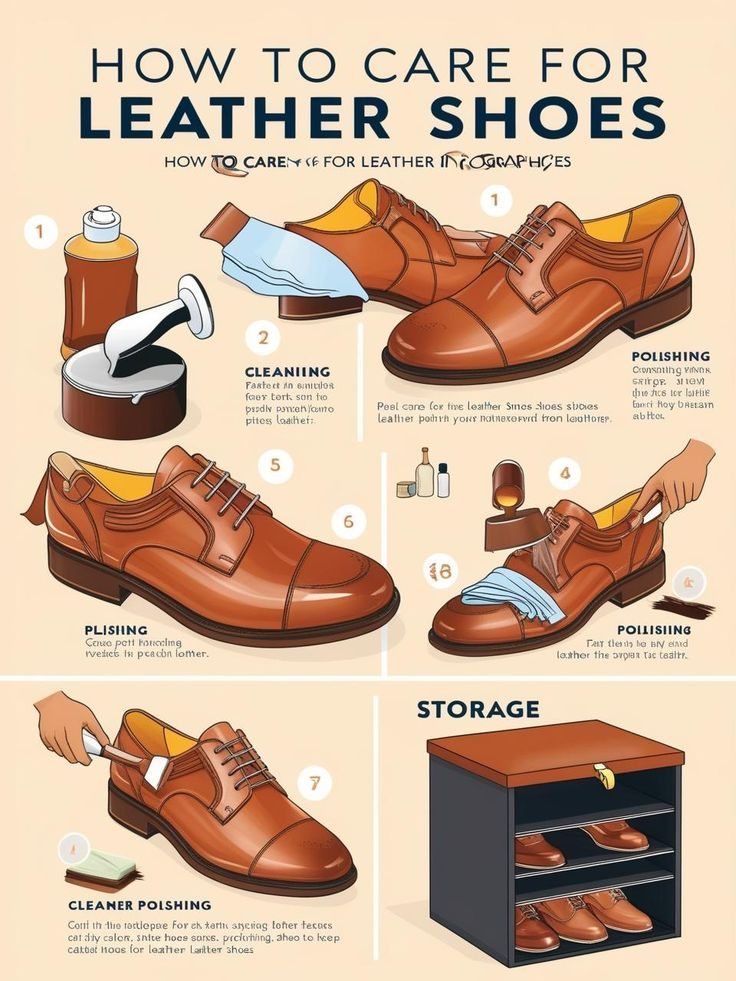
To avoid future peeling and keep your leather shoes in good condition, remember to apply regular conditioning and moisturizing. Select aUse a premium leather conditioner or moisturizer, and apply it liberally to the entire shoe, paying special attention to the areas that tend to peel. Don’t be frugal. Give the conditioner time to permeate the leather and maintain its suppleness, preventing cracking and dryness.
My Experience:
After fixing the peeling on my leather shoes, I made it a daily routine to condition them regularly. Applying leather conditioner not only keeps the leather soft and supple but also helps prevent peeling in the future.
Seek Professional Help:
Do not be afraid to get professional assistance if you are unclear how to fix your peeling leather shoes or if the damage is severe. A knowledgeable cobbler or leather repair specialist can evaluate the damage in-depth and make professional repairs to extend the life of your shoes.
My Experience:
When the damage was too great for me to handle, I hired a professional cobbler. I was able to precisely fix my leather shoes and make them seem brand new thanks to their expertise and abilities.
Best Products to Fix Peeling Leather Shoes
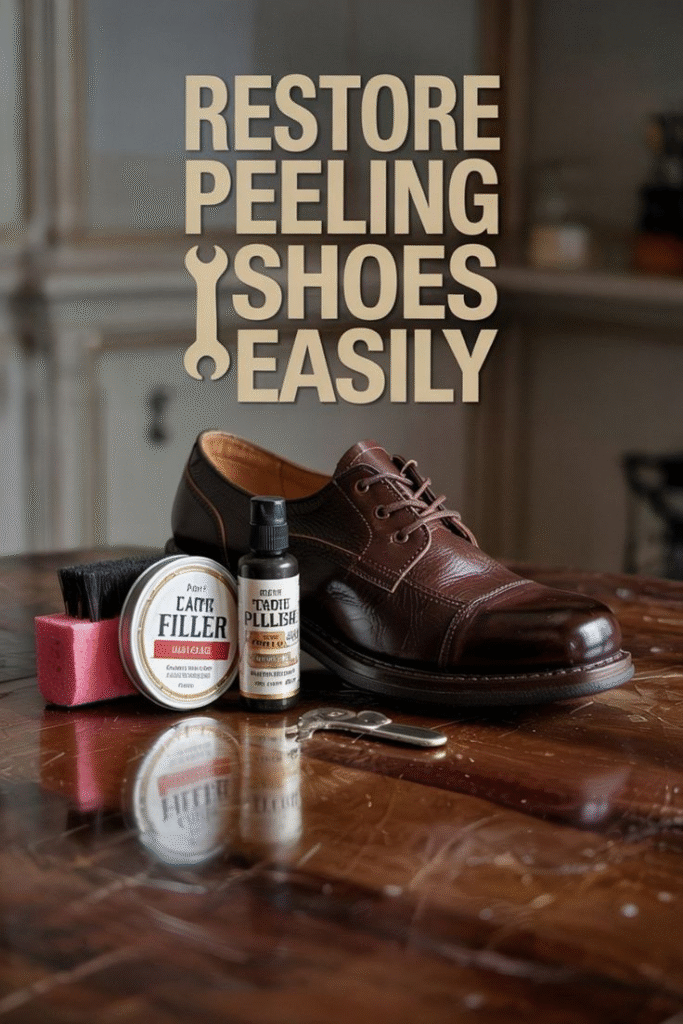
Choosing the right products can make a big difference when you Fix Peeling Leather Shoes. A quality leather filler, matching leather paint, conditioner, and protective finish help restore the damaged surface while improving durability. Always test any product on a small hidden area before applying it to the entire shoe.
What steps can I take to prevent my shoes from peeling?
- Regular Cleaning:
- Conditioning Ritual:
- Moisture Management:
- Storage Savvy:
- Rotation Routine:
- Quality Investment:
- Professional Touch-ups:
I’ve been able to keep my shoes from peeling and extend their life thanks to my experiences and commitment to good shoe maintenance. By incorporating these methods into my daily regimen, I will be able to continue enjoying my favorite pairs for many years to come.
FAQs:
Can peeling leather shoes really be repaired?
Yes. Minor peeling can usually be repaired with the proper leather repair products and careful preparation.
Does leather paint stop peeling?
Leather paint improves the appearance, but lasting results depend on cleaning, filling damaged areas, and sealing the repair correctly.
Can faux leather be repaired?
Yes, although faux leather repairs may not last as long as repairs on genuine leather because the outer coating continues to wear over time.
How long do leather repairs last?
With proper care and maintenance, quality repairs can last for months or even years, depending on how often the shoes are worn.
Is it worth trying to Fix Peeling Leather Shoes?
Yes. If the peeling is minor or moderate, it’s usually worth trying to Fix Peeling Leather Shoes because the right repair techniques can restore their appearance and extend their lifespan at a much lower cost than buying a new pair.
Conclusion:
To sum up, my experience with peeling leather shoes has taught me a lot. I’ve learned the best ways to bring my cherished shoes back to their former splendor via trial and error. Every technique, whether it is fillers, leather glue, or repairs, has taught me to be patient and persistent. My personal experiences with peeling leather have taught me the value of preventative upkeep and care. I now have the skills and self-assurance to take on the problem of repairing leather shoes thanks to these experiences.
By following these tips to Fix Peeling Leather Shoes, you can keep your favorite footwear looking clean, stylish, and wearable for much longer while avoiding unnecessary replacement costs.
Read more about
I’m a footwear blogger passionate about exploring comfortable shoes, smart buying choices, and budget-friendly footwear options. At Cheapsoles.com, I share practical shoe guides, care tips, sizing advice, and helpful insights to make choosing the right shoes easier.
I research footwear trends and provide simple, reliable information to help readers find comfortable and valuable footwear options for everyday life.